
Bringing old photo memories back to life can feel daunting, but the Kodak Slide N Scan actually makes it a lot easier than you’d think. After setting it up and loading in a handful of family slides and film, it was surprisingly straightforward to convert negatives and slides into digital photos. The big 5” display is a real perk for previewing images in real time and making basic tweaks before saving.
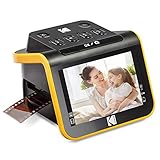
- SAVE OLD PHOTO MEMORIES: 1422MP Digital Film Scanner Lets You View, Edit and Convert Your Old Color and BandW Negatives 135, 110, 126mm and 50mm Slides 135, 110, 126mm to Digital Files and Save Directly to SD Card (NOT INCLUDED)
- 5” LCD DISPLAY WITH GALLERY MODE: Features Large, Crystal-Clear Screen with Wide Viewing Angle for Instantly Previewing and Editing Photos | Great for Sharing with Friends and Family or Using as an Elegant Digital Picture Frame in Home or Office
- CONVENIENT EASY-LOAD FILM INSERTS: Quick-Feeding Tray Technology Allows for Continuous Loading Action, Making Scanning Fast and Simple Includes 50mm Slide Holder, Adapters for 135, 110 and 126 Films, Cleaning Brush, USB and HDMI Cables

If you’ve got a mountain of old film, scanning does take a while, but the continuous load tray helps move things along. Image quality is pretty good for most casual users, though if you’re after truly professional results, you’ll probably want something a bit fancier. The device itself is compact and fits in with most home setups, and it can handle a variety of film types and sizes without much trouble.
Bottom Line
If you want to digitize old slides and film without a headache, the Kodak Slide N Scan is a solid pick.
Click here to purchase on Amazon.
Overview of the KODAK Slide N SCAN Film & Slide Scanner
Getting started with the Slide N SCAN is pretty painless, and the 5-inch screen really helps when previewing images before saving. The film trays and adapters work smoothly with 35mm, 126, and 110 negatives and slides. It’s kind of satisfying to watch old family photos pop up as digital files in just a few steps.
Build quality feels decent—nothing fancy, but sturdy enough. It’s small enough to squeeze onto a crowded desk. Some folks have pointed out that the scans are great for family sharing or basic archiving, but if you’re a photo perfectionist, you might crave higher resolution or more control. For most people just wanting to save memories, though, the Slide N SCAN keeps things simple.
Effortless Photo Digitization
Getting old film and slides into a digital format doesn’t have to be complicated. The Slide N SCAN lets you just feed in negatives or slides using the easy-load adapters. Photos show up instantly on the 5-inch screen, so you can see what you’re digitizing—no extra steps.
The process is straightforward—even first-timers usually don’t hit any major snags. With a push of a button, images are saved to an SD card for backup and sharing. Only real downside: scanning a big collection takes time, since you’re working one photo at a time.
Pros:
- Simple, intuitive operation
- Instant preview on a large display
- Minimal technical hurdles
Cons:
- Not ideal for high-speed batch scanning
- SD card not included—plan to buy one
Large 5-Inch LCD Display
The 5-inch LCD screen is a standout. It’s bigger than most film scanner displays, so reviewing slides and negatives before saving them is easier on the eyes. The preview helps you catch cropping issues or blurry images right away—no need for an external monitor.
Colors and details come through clearly, though there can be a bit of glare under strong overhead lights. If you’re working at a desk or in a bright room, just tilting the screen a little usually helps.
Pros:
- Easier navigation of images
- Larger preview area means less eye strain
Cons:
- Glare can be annoying in bright light
Honestly, the display just makes the whole process more comfortable, even if it’s not perfect.
User-Friendly Film Loading System
Getting film and slides into the device is pretty straightforward. The quick-load trays guide each negative or slide into place, and most people find the process fast and not too fiddly.
Switching between 135, 110, and 126 formats might take a second to figure out, but the labeled adapters help keep things organized. If you’re digitizing a huge collection, it can get a little tedious since you still have to load each one manually.
The loading system does a good job of preventing jams, and it’s approachable even if you’ve never used a film scanner before.
Simple One-Touch Editing
Editing photos with this scanner is refreshingly simple. There’s a dedicated “scan” button that skips the nonsense and lets you quickly capture and adjust images right on the device. Controls for color and brightness are easy to use—even if you’re not a photo editing pro.
You can also select film types or assign dates without much fuss. The editing features are pretty basic, though—don’t expect Photoshop-level tools. For quick tweaks and sharing, though, the one-touch system makes the process a lot less tedious.
Versatile Compatibility and Design
Sliding different film and slide types into this scanner is pretty stress-free, especially since it supports 135, 126, and 110 formats. If you’ve got a mix of negatives and slides, you’re covered. It connects easily to computers and TVs through USB and HDMI, so moving files or showing off photos is simple.
The compact body fits most desks without hogging space. The plastic build might not wow you, but it’s practical and doesn’t feel cheap. It’s clear the focus is on function and saving space, not flashy looks—which, honestly, is a good call for a scanner.
Pros and Cons
Pros
This device is easy to use, even if you’re not a scanner expert. The interface is straightforward, so you can get scanning quickly. The 5-inch LCD lets you review images right away, which is a real time-saver.
It handles different film and slide sizes, making it versatile for families with mixed collections. It’s compact, so it won’t clutter your space, and it connects easily to computers via USB. The built-in editing functions—quick color and brightness tweaks—are handy for basic touch-ups.
Highlights:
- Easy setup and use
- Fast scanning and preview
- Supports multiple film types
- Simple editing options
- Compact, space-saving design
Cons
While scanning is quick, image quality might not cut it for professional archivists. Some people notice colors aren’t always spot-on, especially with older negatives. Advanced editing is limited compared to dedicated software.
No SD card comes in the box, so you’ll need to grab one. Scanning big collections takes time, and loading each slide by hand can get repetitive.
Points to consider:
- Image quality may not satisfy pros
- Manual loading is tedious for large archives
- No SD card included
- Limited advanced editing
Customer Reviews
A lot of users say the Slide N SCAN is easy to set up and does a nice job digitizing old negatives and slides. The interface gets high marks for being user-friendly—even folks with minimal tech experience have no trouble converting film to digital files.
Some reviews mention scanning a big collection is time-consuming, but scan quality is generally solid for family photos. While it’s not really aimed at professionals, most people are happy with the results for everyday use.
People like the color restoration and compact size. Still, a few recommend checking your film types before buying, just to be safe. Overall, most users feel they’re getting good value.
Sharing and Preserving Memories
Looking back at decades-old family slides is so much easier with this little device. The Slide N SCAN makes quick work of digitizing negatives, so those memories aren’t stuck in a box anymore. Sharing digital images through email or social media is easy after scanning, and the quality holds up well for general use.
Saving images directly to an SD card is super practical—they’re easy to back up or send to relatives. The big screen is nice for previewing and chatting about photos with family as you scan. If you’ve got a massive archive, the process does take time, but most people think it’s worth it for the preservation.
Frequently Asked Questions
People have plenty of questions about whether this scanner can really simplify digitizing old film, how it stacks up against other options, and if it’s flexible enough for different needs. Here are some of the most common questions that come up after using the Slide N SCAN.
How does the Kodak Slide N SCAN perform in comparison to the Plustek scanners?
Having tried both, I’d say Slide N SCAN stands out for its simplicity and speed. It’s way more beginner-friendly than most Plustek models, thanks to the straightforward film loading and instant viewing on the built-in screen.
Plustek scanners, especially the pro models, usually deliver higher-quality scans with finer detail, but they take longer and need more technical setup. Slide N SCAN is less intimidating if you just want quick, no-fuss results. Scan quality depends on your original film, but for home archiving, Slide N SCAN is the one I’d pick if convenience is more important than max resolution.
At a glance comparison:
| Feature | Slide N SCAN | Plustek Scanners |
|---|---|---|
| Ease of use | Very simple | More complex |
| Speed | Fast batch scans | Often slower |
| Image quality | Adequate for most | Higher, pro-level |
| Software needed | Not required | Yes, often needed |
What are the main differences between the Kodak Slide N SCAN 5 and the Kodak Slide N SCAN 7 models?
The big difference is screen size and a few design tweaks. The Slide N SCAN 7 has a slightly bigger and clearer LCD, which can make viewing and editing less tiring.
Performance and speed are pretty much the same, and both handle 35mm, 110, and 126 film. If you’re planning to work through a ton of slides, the 7-inch screen might be worth it. Otherwise, the 5-inch version covers the basics in a smaller package.
Is an SD card necessary to operate the Kodak Slide N SCAN, or can it be used without one?
You don’t need an SD card just to view slides or negatives—you can pop in film, preview, and adjust images right on the unit. But if you want to save digital copies, you’ll need an SD card (up to 32GB). Without one, you can’t keep or transfer any images.
If you plan to archive or share photos, definitely get an SD card. It works with standard SD or SDHC cards, which are easy to find.
What software is recommended for best results when scanning slides with the Kodak Slide N SCAN?
No special software needed—scanning and basic edits all happen on the device. You can rotate, tweak colors, and crop on-screen. Once your images are saved to the SD card, you might want to edit or organize them further on your computer.
Popular choices for post-processing:
- Adobe Photoshop or Lightroom: Great for detailed edits and batch work.
- GIMP: Free and decent for basic adjustments.
- Google Photos: Handy for organizing and minor tweaks.
Since there’s no bundled software, there’s less to learn, but if you want pro-level results, you’ll want to export files and use your favorite editor.
How do user reviews on Amazon reflect the performance of the Kodak Slide N SCAN?
Most feedback is positive—lots of buyers mention smooth operation and decent image quality. People like how fast old slides and negatives get digitized. The user-friendly interface gets a lot of praise, especially from those with little tech experience.
A common complaint is that it’s not meant for professional archiving—some wanted higher sharpness or more accurate colors. Rare film sizes can also be tricky. For most family archiving or casual sharing, though, reviews show users are happy with the speed and quality.
Summary of commonly reported pros and cons:
-
Pros:
- Easy and fast setup
- User-friendly display
- Handles a range of film types
-
Cons:
- Limited image resolution for professionals
- SD card not included
- Not ideal for rare or unconventional film sizes
What are the key differences between the Kodak Scanza and the Kodak Slide N SCAN?
Slide N SCAN and Scanza both aim at home users who want to digitize film and slides without too much hassle. They handle a range of formats and come with LCD screens, but the way you use them feels a bit different.
-
Slide N SCAN:
- Bigger, brighter 5” display
- Has a continuous feed tray, so batch scanning goes pretty quick
- Controls are straightforward—less fiddling when saving scans
-
Scanza:
- Smaller and more compact, but the screen’s not as generous
- Relies on adapters for each film type, which can slow you down if you’re switching formats a lot
- The menu system? Some folks say it takes a little getting used to
If you care about speed and being able to see what you’re doing clearly, the Slide N SCAN tends to edge out the Scanza—especially if you’ve got a stack of old slides or negatives to get through. Scanza’s more for someone who doesn’t mind taking their time or just wants a device that doesn’t take up much space.


