
If you’re still rocking an AM4 system and want the best AM4 CPU for gaming without jumping to a new platform, the AMD Ryzen 9 5900XT is worth a serious look.
With 16 cores, 32 threads, and a boost clock up to 4.8 GHz, it sits right at the top of the AM4 lineup for mixed workloads.
It delivers strong gaming performance at a price that honestly makes this aging platform feel relevant again.
This chip uses AMD’s well-established Zen 3 architecture, which means you get mature silicon and plenty of driver and software support.

- Powerful Content Creation and Game Performance
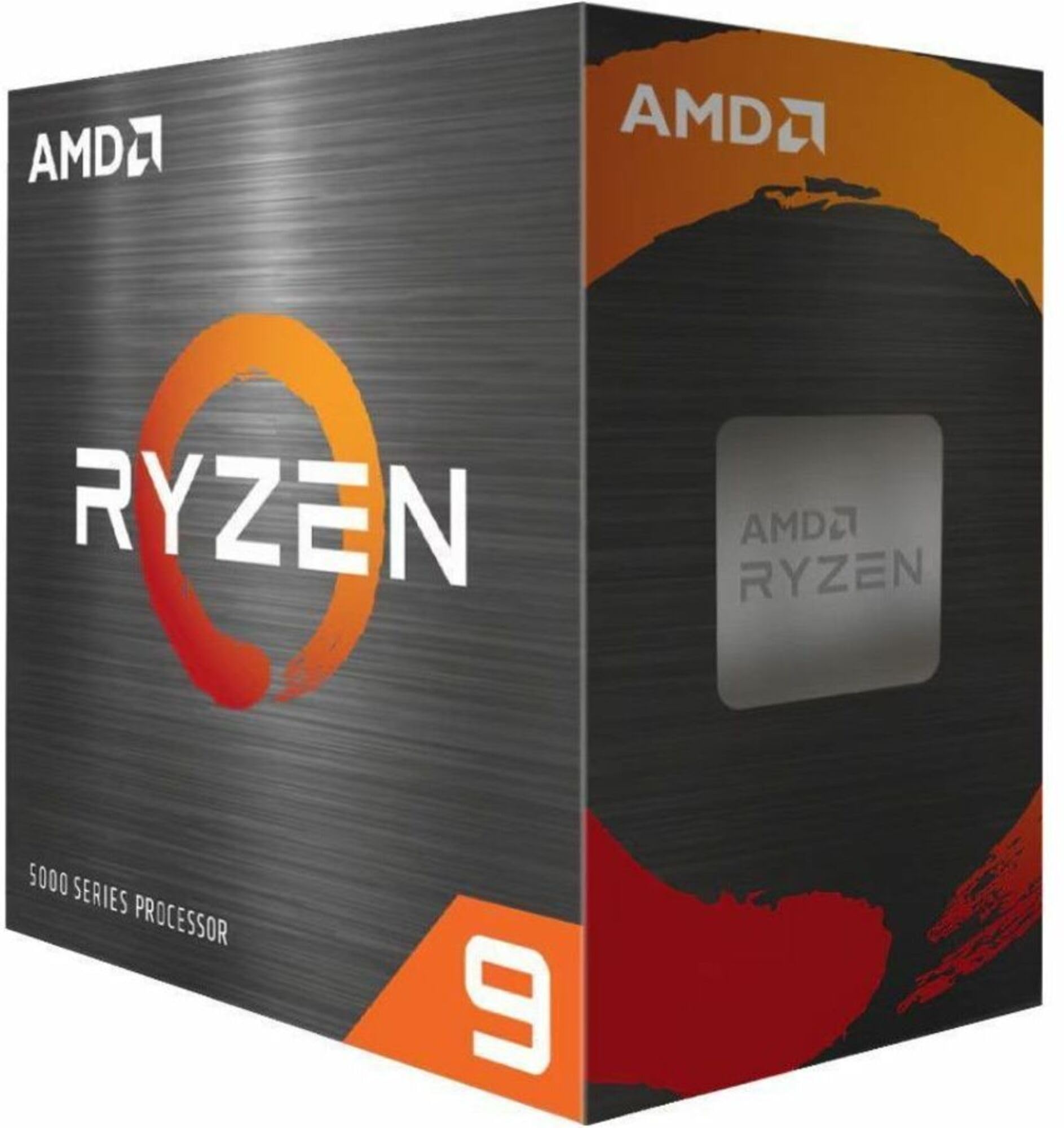
- 16 Cores and 32 processing threads, based on AMD "Zen 3" architecture
- 4.8 GHz Max Boost, unlocked for overclocking, 72 MB cache, DDR4-3200 support

If you need a processor that handles demanding games, content creation, and heavy multitasking on your existing AM4 motherboard, the 5900XT is one of the smartest upgrades you can make in 2026.
It supports PCIe 4.0 for fast NVMe storage and modern GPUs.
The unlocked multiplier means you can push clocks further with decent cooling, but keep in mind there’s no cooler in the box.
So, budget for a solid aftermarket solution.
Bottom Line
The Ryzen 9 5900XT is a compelling choice for anyone who wants top-tier AM4 performance without migrating to a new platform.
It pairs raw multi-threaded muscle with respectable single-threaded speed, making it versatile for gaming and productivity alike.
Click here to check the current price on the AMD Ryzen 9 5900XT and upgrade your AM4 build today!
Overview Of The AMD Ryzen 9 5900XT
Built on AMD’s Zen 3 architecture, the 5900XT holds a unique spot in the AM4 lineup.
It packs 16 cores and 32 threads into a 105W TDP envelope, with a base clock of 3.3 GHz and a max boost of 4.8 GHz.
That’s a slight single-threaded frequency bump compared to the older 5950X, and it reportedly runs a bit cooler under sustained loads.
| Specification | Detail |
|---|---|
| Architecture | Zen 3 |
| Cores / Threads | 16 / 32 |
| Base Clock | 3.3 GHz |
| Max Boost Clock | 4.8 GHz |
| Total Cache | 72 MB |
| TDP | 105W |
| Memory Support | DDR4-3200 |
| Socket | AM4 |
| PCIe | 4.0 |
| Included Cooler | None |
The 72 MB of combined cache (64 MB L3 + 8 MB L2) keeps data close to the cores, which is great for both gaming and productivity.
It ships with a 3-year manufacturer warranty and fits any compatible AM4 motherboard with a BIOS update.
Strong Gaming And Multitasking Performance
Where the 5900XT really shines is in mixed-use scenarios.
Running a game while streaming through OBS, editing video in the background, or keeping dozens of browser tabs open barely fazes this processor.
Sixteen cores give you headroom that a 6-core or 8-core chip just can’t match.
For pure gaming at 1440p and above, the GPU usually becomes the bottleneck, so the 5900XT keeps frames high and consistent.
At 1080p, where CPU performance matters more, it holds up well against newer options.
X3D variants with extra cache will edge it out in specific titles, but that’s not the whole story.
If your workload includes both gaming and content creation, the 5900XT handles that dual-role better than any 8-core AM4 chip can.
16 Cores And 32 Threads
Having 16 physical cores with simultaneous multithreading means 32 threads are available to your operating system at all times.
This is the same core count as the flagship 5950X, which used to command a much higher price.
Each core cluster is arranged in two 8-core CCDs (Core Complex Dies).
This layout is perfect for parallel workloads like video rendering, 3D modeling, and software compilation.
Programs such as AutoCAD, Blender, and DaVinci Resolve scale well across all 16 cores, cutting render times roughly in half compared to an 8-core Zen 3 chip.
For gaming, most engines use 6 to 8 threads heavily, so the extra cores act as a buffer for background processes.
You won’t see all 16 cores maxed out during gameplay, but they ensure nothing else on your system competes for resources while you play.
4.8 GHz Boost And Unlocked Tuning
The max boost clock of 4.8 GHz applies to lightly threaded workloads where one or two cores can sprint to peak frequency.
This single-core speed directly impacts gaming frame rates and application responsiveness.
Because the multiplier is unlocked, you can push beyond stock settings if your cooling and motherboard VRM can handle it.
Precision Boost Overdrive (PBO) is the easiest route, letting the chip opportunistically boost higher within your thermal and power limits.
Manual overclocking is also on the table for experienced users willing to dial in per-core ratios.
DDR4-3200 is the officially supported memory speed, but most AM4 boards run DDR4-3600 with a 1:1 Infinity Fabric ratio without issue.
Tuning memory and Infinity Fabric together can add meaningful fps in CPU-bound scenarios.
AM4 Compatibility And PCIe 4.0 Support
One of the biggest perks here is platform compatibility.
If you already own a B550 or X570 motherboard, you can drop the 5900XT in with a BIOS update and start using it right away.
Even many B450 and X470 boards support Zen 3 with updated firmware, though VRM quality on budget boards may limit sustained performance.
PCIe 4.0 support gives you access to:
- Gen 4 NVMe SSDs with read speeds up to 7,000 MB/s
- Full bandwidth for modern GPUs like the RTX 4070 and RX 7800 XT
- Future-proofed I/O for peripherals and add-in cards
This makes the 5900XT a meaningful upgrade from older Zen 2 processors without requiring a new motherboard, new RAM, or a new cooler mount.
Your total upgrade cost is essentially just the chip itself (plus a cooler if you don’t already have one).
Cooling And Power Considerations
No cooler ships in the box, and that’s not a minor detail.
At 105W TDP, the 5900XT generates substantial heat under sustained multi-threaded loads.
Multiple users report temperatures climbing past 90°C with inadequate cooling.
A quality tower cooler like the Noctua NH-D15 or a 240mm AIO will handle the chip at stock settings.
If you plan to use PBO or manual overclocking, a 280mm or 360mm AIO is the safer bet.
Single-fan 120mm AIOs just aren’t enough; real-world reports confirm they can’t keep temps in check.
Airflow in your case matters just as much as cooler choice.
Make sure your chassis has good front-to-back ventilation.
The 5900XT runs noticeably cooler than the 5950X it effectively replaces, but “cooler” definitely doesn’t mean “cool.”
Budget at least $50 to $100 for a capable aftermarket cooler if you don’t already have one.
Pros And Cons
Pros
- 16 cores and 32 threads deliver excellent multi-threaded and multitasking performance
- 4.8 GHz max boost keeps single-threaded and gaming performance competitive
- Drop-in upgrade for existing AM4 motherboards (B550, X570, and many B450/X470)
- PCIe 4.0 support for fast NVMe drives and modern GPUs
- Unlocked multiplier for overclocking and PBO tuning
- Runs cooler than the 5950X while delivering comparable performance
- 72 MB of total cache benefits gaming and productivity workloads
- Competitively priced for a 16-core processor in 2026
Cons
- No cooler included; a robust aftermarket cooler is required
- Dual-CCD design means slightly lower gaming performance than X3D variants in some CPU-bound titles
- 105W TDP requires good cooling and adequate case airflow
- DDR4-only memory support (no DDR5 path forward)
- AM4 is an end-of-life platform with no future CPU upgrades beyond Zen 3
Customer Reviews
Buyers consistently praise the 5900XT for the performance leap it provides over older AM4 chips.
Several users who upgraded from Ryzen 5 3600 or Ryzen 3 3100 processors report dramatically faster render times and smoother multitasking.
Content creators running multiple engineering or design applications at once highlight how well it handles parallel workloads.
The most common criticism centers on thermals.
Multiple reviewers emphasize that a single-fan AIO is not enough and recommend at least a 240mm or 360mm liquid cooler.
Those who paired the chip with a quality air cooler like the Noctua D12L also reported good results.
Gaming-focused buyers note that while the 5900XT is powerful, the X3D variants offer better pure gaming performance due to the extra 3D V-Cache.
For mixed workloads that combine gaming with streaming or content creation, users consider the 5900XT the stronger choice.
The chip earns high marks across the board and is frequently described as an outstanding value for anyone extending the life of an AM4 system.
Frequently Asked Questions
How does the Ryzen 9 5900XT perform in modern gaming at 1080p and 1440p?
At 1440p and above, the 5900XT keeps up with the best AM4 processors because the GPU becomes the primary bottleneck.
At 1080p, where CPU performance matters more, it delivers smooth frame rates in modern titles, though X3D chips with extra cache can pull ahead by 5-15% in select games.
For most players, the difference is negligible unless you are chasing maximum competitive fps at 1080p.
What is the Ryzen 9 5900XT release date and how long has it been on the market?
AMD launched the Ryzen 9 5900XT as part of a late-cycle refresh of the Ryzen 5000 series.
It has been available since mid-2024, giving it roughly two years on the market.
Driver and BIOS support are fully mature at this point, meaning you benefit from a stable, well-optimized platform.
What is the current Ryzen 9 5900XT price and is it good value compared to similar CPUs?
The 5900XT is pretty aggressively priced for a 16-core AM4 chip, especially when you catch it on sale. Compared to the original price of the 5950X, it’s honestly a much better deal and the performance gap is almost nonexistent.
Prices jump around a lot, so it’s worth checking Amazon or wherever you shop for the latest numbers.
Which AM4 motherboards and chipsets are recommended for the Ryzen 9 5900XT?
B550 and X570 boards are your best bet—they fully support PCIe 4.0 and usually have beefier VRMs. That matters if you want stable power for all those cores.
Some B450 and X470 motherboards can run the 5900XT after a BIOS update, but you’ll want to double-check VRM cooling. If you’re planning to overclock or push PBO, definitely look for boards with solid power delivery.
How does the Ryzen 9 5900XT compare to the Ryzen 9 5900X in performance and efficiency?
The 5900XT bumps things up to 16 cores, while the 5900X tops out at 12. That difference really shows in heavy multi-threaded tasks.
It also manages a max boost clock of 4.8 GHz—same as the 5900X on paper—but folks have reported the 5900XT actually runs a bit cooler than the old 16-core 5950X. If you’re chasing more cores for productivity, the 5900XT is a clear step up from the 5900X.
How does the Ryzen 9 5900XT compare to the Ryzen 7 5700X3D for gaming and mixed workloads?
The 5700X3D packs 96 MB of 3D V-Cache, which usually gives it a clear edge in gaming benchmarks. That extra cache really does seem to matter if you’re chasing higher frame rates.
On the flip side, the 5900XT brings double the cores—16 instead of 8. So, it’s just way better for stuff like streaming, video editing, or rendering.
If gaming is all you care about, the 5700X3D feels like the obvious pick. But if you want a CPU that doesn’t sweat when you throw heavy productivity tasks at it, the 5900XT is probably more your speed.


