
Hunting for a storage upgrade that can handle the latest games and heavy-duty apps? The WD_Black SN8100 2TB cranks out PCIe Gen 5 speeds, boasting sequential reads up to 14,900MB/s and writes up to 11,000MB/s for this size. It’s made by SanDisk Technologies and sold under Western Digital’s name, if you’re curious.
This SSD uses TLC 3D CBA NAND and comes in the familiar M.2 2280 form factor, fitting most desktops and laptops without hassle. People who’ve upgraded from Gen 4 drives say it’s noticeably snappier—fast boots, zippy file moves, that sort of thing.
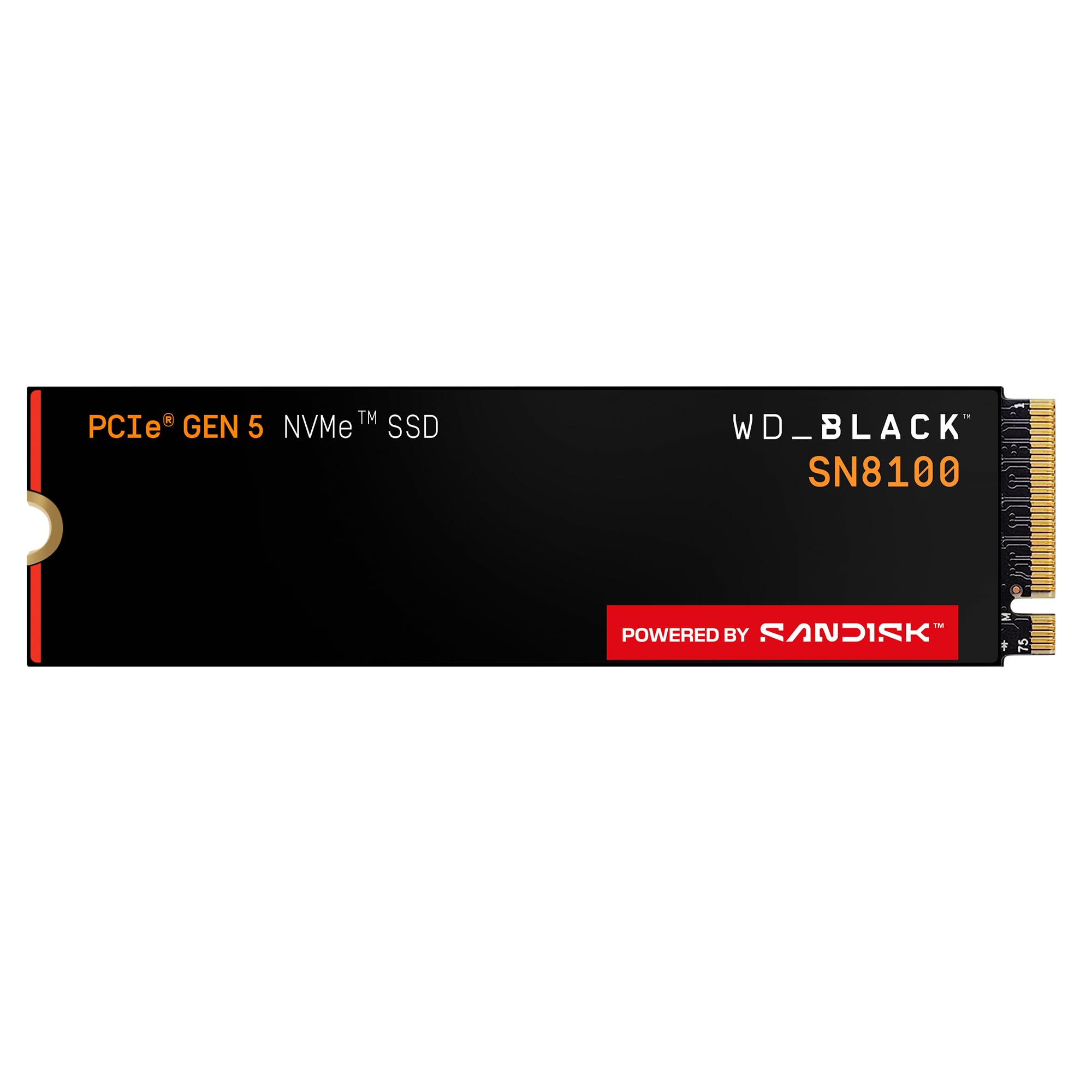
One thing that jumps out is the power efficiency. It’s apparently over 100% better than last-gen drives, all while sipping 7.5W or less on average. That helps keep temps in check, and lots of users mention the drive stays cool even when pushed. On the endurance front, higher-capacity models go up to 4,800 TBW, and you get access to SanDisk Dashboard software if you’re on Windows.
Some folks have dropped this drive into their PlayStation 5s for extra space. Just know you’ll need a motherboard with PCIe Gen 5 support to see those top speeds. Without it, the drive still works, just at whatever speed your PCIe slot supports.
The 2TB size is roomy enough for operating systems, big apps, and a healthy stack of games. People moving from older SSDs say the performance jump is obvious—faster everything, basically.
Overview of the WD_Black SN8100 2TB NVMe SSD
This PCIe 5.0 SSD is a serious leap forward if you’re building a new rig or refreshing your current setup. The SN8100’s 2TB model can hit 14,900MB/s reads and 11,000MB/s writes, which is wild compared to most consumer drives out there.
Key Technical Highlights:
| Aspect | Details |
|---|---|
| Interface | PCIe 5.0×4 NVMe |
| Form Factor | M.2 2280 |
| NAND Technology | TLC 3D CBA |
| Average Operating Power | 7.5W or less |
It’s built on advanced TLC 3D NAND tech, and Western Digital claims the SN8100 is over twice as power-efficient as their Gen 4 models at similar speeds. That’s a bold claim, but the numbers seem to back it up.
Heads up: you do need a PCIe 5.0 motherboard to hit those headline speeds. If you’re still on Gen 4, you’ll miss out on the full performance.
Blistering PCIe Gen 5 Performance
The Gen 5 interface is no joke—sequential reads up to 14,900 MB/s and writes up to 11,000 MB/s. That’s a huge step up from Gen 4 drives, making the SN8100 a real contender for anyone moving big files around.
It’s sticking with TLC 3D NAND, but the power efficiency is supposed to be best-in-class for Gen 5. Early Gen 5 SSDs got a bad rap for running hot and guzzling power, so this is a welcome change.
Key Performance Aspects:
- Sequential reads up to 14,900 MB/s
- Sequential writes up to 11,000 MB/s
- Optimized thermal management for Gen 5 speeds
You’ll really notice the difference when loading giant games, rendering video, or crunching AI data. That power efficiency also means less throttling when you’re hammering the drive for long stretches.
Exceptional Storage Capacity
With 2TB of space, the SN8100 hits a sweet spot for most users needing room for games, projects, or AI datasets. You can stash a ton of files before you have to start cleaning house.
The 2TB size feels right—not too expensive, not too cramped. If you’re editing 4K video or juggling a bunch of massive games, this should cover you. If you’re working with 8K footage or monster AI projects, you might need to keep an eye on your free space.
The M.2 2280 form factor barely takes up any space, so it’s great for compact builds where you can’t squeeze in a bunch of drives.
Power Efficiency and Thermal Management
The SN8100 is actually pretty impressive when it comes to power draw. It manages to keep things cool while still delivering crazy-fast speeds, which isn’t something you could always say about Gen 5 SSDs.
Feedback from real users backs this up—temps are lower than older Gen 4 drives, even though the SN8100 is way faster. The TLC 3D NAND seems to help with both energy use and heat.
No one’s reporting thermal issues in day-to-day use, so you probably won’t need extra cooling tricks. If your build is tight on airflow, that’s good news.
Advanced TLC 3D NAND Reliability
The SN8100 uses TLC 3D NAND, stacking memory cells to pack in more storage and keep things durable. This approach usually balances speed, capacity, and cost pretty well.
Western Digital is pushing the reliability angle here. TLC used to be less durable than SLC or MLC, but 3D stacking has improved things a lot. It should hold up fine for gaming and creative work with lots of reads and writes.
The vertical NAND design helps cut down on interference, which should mean better data integrity over time. Still, check the warranty and think about your workload—if you’re hammering the drive with AI or video editing, it’s worth considering.
Software Suite for Maximizing Performance
Windows users get access to the SanDisk Dashboard, which lets you check drive health, monitor performance, and handle firmware updates. It’s handy if you like keeping tabs on your hardware.
Key Software Features:
- Performance monitoring tools
- Health status tracking
- Firmware update notifications
You also get Acronis True Image for SanDisk, making it easier to clone your old drive and move everything over. That saves a ton of hassle if you’re migrating big game libraries or work files.
One downside: the SanDisk Dashboard is Windows-only. If you’re on Mac or Linux, you won’t get these tools, which might be a dealbreaker for some.
Tailored for Demanding Users
If you’re into AI, video editing, or gaming at the high end, the SN8100 is built to smash bottlenecks. Those 14,900MB/s reads and 11,000MB/s writes mean everything moves faster—no more staring at load bars.
Key advantages for intensive workflows:
- Handles large project files and game libraries with 2TB capacity
- Maintains cooler operating temperatures than competing PCIe Gen 5 drives
- Offers improved power efficiency compared to PCIe Gen 4 alternatives
Just remember, you need a Gen 5 motherboard to get the most out of it. For basic use, it’s probably overkill, but if you’re pushing your system hard, you’ll notice the upgrade right away.
Pros and Cons
The SN8100 brings some serious improvements over last-gen drives, but it’s not a one-size-fits-all solution. Make sure your system can actually use PCIe 5.0 before pulling the trigger.
Pros
This SSD delivers insane sequential reads up to 14,900MB/s and writes up to 14,000MB/s (on the 2TB model). The difference is obvious—faster boots, quicker game loads, and speedier file transfers compared to Gen 4.
Power efficiency is a big win here. It keeps speeds high while drawing 7.5W or less, so you don’t have to worry about your system overheating or sucking up too much juice.
Thermal performance is better than you’d expect for a drive this quick. Users say it actually runs cooler than some Gen 4 drives, which is kind of wild.
2TB gives you loads of space for your OS, games, and creative projects. If that’s not enough, there are bigger versions up to 8TB.
Endurance is solid too, topping out at 4,800 TBW on the larger models. The TLC 3D NAND balances speed and lifespan, and the SanDisk Dashboard makes it easy to keep tabs on drive health (if you’re on Windows).
Cons
The drive needs a PCIe 5.0 compatible motherboard if you want to hit those advertised speeds. If your system only supports PCIe 4.0, you’re basically paying for performance you can’t use.
It’s still a pricey upgrade compared to PCIe 4.0 SSDs. Honestly, for most folks, the speed boost might not be worth the extra cash, especially since PCIe 5.0 is way ahead of what most apps and games actually need right now.
Another thing—there’s just a single namespace supported. That could be a dealbreaker for advanced users who want more flexible storage setups.
Customer Reviews
People seem pretty happy with the SN8100’s performance. Faster boot times and file transfers are a common theme in reviews, especially coming from older drives. Some folks are surprised at how cool it runs for a PCIe 5.0 SSD, which is a nice bonus.
Common praise includes:
- Ridiculously fast read/write speeds in daily use
- Better thermal handling than other options
- Big step up from PCIe 4.0 SSDs
Of course, that premium price tag comes up a lot. Some buyers point out you’ll only get full speed with a PCIe 5.0 motherboard, which could be a letdown for anyone with older gear. People switching from something like the Samsung 980 Pro say the difference in everyday use and gaming is immediate.
Gamers and professionals seem pleased overall, though a few mention that if you’re hammering the drive with heavy workloads, something with a higher endurance rating might be a smarter pick.
Frequently Asked Questions
How does the performance of the WD_Black SN8100 2TB SSD compare to its competitors in the same price range?
The SN8100 is right up there with the fastest consumer SSDs—think up to 14,900MB/s reads and 11,000MB/s writes for the 2TB version. That’s ahead of most PCIe Gen 5 rivals if you’re just looking at the numbers.
It also pulls off over 2,300,000 IOPS in random workloads at 2TB, which actually feels zippy in real-world use. The read latency is super low—around 30 microseconds—so everyday stuff just pops.
Power draw is worth mentioning too. It sips an average of 7.5W or less, which is more than twice as efficient as some PCIe Gen 4 drives from the same brand. That’s great for keeping things cool and stable.
What are the main benefits of the heatsink option for the WD_Black SN8100 NVMe SSD 2TB?
Thermals are good even when you’re pushing the drive hard. Reviewers say it stays cooler than a lot of Gen 4 drives, which is impressive for a Gen 5 SSD.
Adding a heatsink can help if you’re doing heavy file transfers or marathon gaming—just gives you more thermal headroom. The drive’s already pretty well-optimized, so most people won’t see throttling in normal use.
If your case has decent airflow or your motherboard already has an M.2 heatsink, you might not need the extra. But if you’re planning on punishing workloads or your setup runs hot, a heatsink’s a good call.
Can the WD_Black SN8100 2TB NVMe SSD be used in gaming consoles, or is it just for PC?
You can pop the SN8100 into consoles that support M.2 NVMe drives—like the PlayStation 5. People have used it to expand their PS5 storage and seem happy with the speed and space for games.
It easily clears the PS5’s 5,500MB/s read speed requirement, so you’ll have plenty of headroom for quick loading and streaming. Installation’s pretty standard for M.2 drives, but double-check your console’s specs just in case.
The 2TB size gives you lots of room for those huge game installs.
Are there any significant differences in speed or reliability between the 2TB and 4TB versions of the WD_Black SN8100 NVMe SSD?
The 2TB version tops out at 11,000MB/s write, while the 2TB-4TB models can push up to 14,000MB/s. That’s a real jump if you need the fastest writes.
They both hit that 14,900MB/s read speed, and random IOPS (over 2.3 million) are the same for 2TB and up. Higher capacities also have better endurance ratings, which is nice if you’re writing tons of data.
All sizes use TLC 3D CBA NAND, so reliability is consistent across the lineup.
What is the warranty period for the WD_Black SN8100 2TB NVMe SSD and does it cover thermal throttling issues?
Honestly, the exact warranty period isn’t listed clearly for the SN8100. You’ll want to check with whoever’s selling it or go straight to the manufacturer for the details.
Most SSD warranties cover manufacturing defects and early failures, but not issues from bad installation or overheating due to poor cooling. Don’t expect coverage for thermal throttling if your system can’t keep up.
That said, the drive’s power efficiency and thermal design mean throttling isn’t likely under normal use. Reviewers have noticed it runs cooler than older high-performance drives, which is reassuring.
How user-friendly is the installation process for the WD_Black SN8100 2TB NVMe SSD in a typical desktop setup?
The SN8100 uses the standard M.2 2280 form factor, so it fits right into most modern motherboards. You just slide the drive into an open M.2 slot and secure it with a screw—nothing wild, but you’ll want to be gentle.
Before you get too excited, double-check that your motherboard actually supports PCIe Gen 5 if you’re aiming for top speeds. It’ll still work in Gen 4 or Gen 3 slots, but, yeah, expect slower performance since it’ll match whatever interface you give it.
There’s SanDisk Dashboard software (Windows only) included for monitoring and maintenance. Acronis True Image for SanDisk is also bundled in, which honestly makes cloning your old drive and migrating data a lot less stressful.
Boot times hover around 3 seconds after your motherboard does its thing, so you get a pretty snappy system once everything’s set up. Windows and most other operating systems pick up the drive automatically—no oddball drivers needed.


