
If you’re putting together a gaming PC on the AM4 platform in 2026, the AMD Ryzen 7 5800X is still one of the top contenders for that socket. It launched as AMD’s fastest 8-core mainstream chip, and even now, it keeps pace with modern games.
Looking for the best AM4 CPU for gaming without leaping to a new motherboard? The 5800X nails that balance of core count, clock speed, and price.
Eight cores and sixteen threads give you plenty of headroom for gaming, streaming, and general multitasking. It’s a real workhorse if you want to do more than just play.
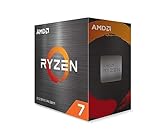
- AMD's fastest 8 core processor for mainstream desktop, with 16 procesing threads. OS Support-Windows 10 64-Bit Edition
- Can deliver elite 100+ FPS performance in the world's most popular games
- Cooler not included, high-performance cooler recommended

With an unlocked multiplier, a max boost of 4.7 GHz, and 36 MB of cache, this chip really outperforms what most would expect from an older socket. It supports PCIe 4.0 on B550 and X570 boards—so your GPU and NVMe drives aren’t held back.
No cooler in the box, though. That’s worth knowing before you buy.
Bottom Line
The Ryzen 7 5800X just keeps delivering on the mature AM4 platform.
If you want 8 cores, high boost clocks, and unlocked overclocking at a solid price, it’s tough to beat.
Click here to check the current price of the AMD Ryzen 7 5800X on Amazon and upgrade your rig today!
Overview Of The AMD Ryzen 7 5800X
Built on AMD’s Zen 3 architecture, this 8-core, 16-thread chip is aimed at mainstream builds that need both strong single- and multi-threaded chops. It drops right into the AM4 socket, making it a painless upgrade if you’re coming from a 3000 or earlier Ryzen.
| Specification | Detail |
|---|---|
| Cores / Threads | 8 / 16 |
| Max Boost Clock | 4.7 GHz |
| Total Cache (L2 + L3) | 36 MB |
| TDP | 105 W |
| Socket | AM4 |
| Memory Support | DDR4-3200 |
| PCIe Support | PCIe 4.0 (X570, B550) |
| Included Cooler | None |
| Warranty | 3 years |
Zen 3’s unified CCX design means all 8 cores get direct access to the full 32 MB L3 cache, which cuts down latency compared to the split-cache setup in Zen 2. That tweak really helps in games.
At 105 W TDP, it draws more juice than the 65 W Ryzen 7 5700X, but that’s the trade-off for higher boost clocks. And with the unlocked multiplier, you can push clocks further if your cooler can keep up.
Gaming Performance That Still Feels Fast
Even in 2026, the 5800X regularly pushes past 100 FPS in most big multiplayer titles at 1080p and 1440p. The Zen 3 single-threaded performance keeps those minimum frame rates high, which just feels better in-game.
At 4K, your graphics card is the real bottleneck, so the gap between this and newer Ryzen chips is just a few percent. If you’re gaming at higher resolutions, you’re not missing much.
Plenty of folks build dedicated gaming rigs around the 5800X and run heavy stuff like stock trading or video upscaling at the same time, without stutters. Eight cores give you breathing room for background tasks—a 6-core chip can get tight.
For the prices it’s going for now, it’s arguably the best AM4 gaming CPU unless you really need the extra V-Cache from the 5800X3D.
8 Cores And 16 Threads For More Than Gaming
Here’s where the 5800X earns its keep beyond games. Sixteen threads chew through video editing, 3D rendering, and code compiles with a lot more muscle than any 6-core Ryzen.
Content creators doing light-to-medium work—think Premiere or Topaz upscaling—will find the 5800X quick and responsive. The 36 MB cache is also handy for latency-sensitive jobs, like database queries or scientific apps.
Streaming while gaming? No problem. Run OBS with x264 on “fast” and you’ll still get solid frame rates. A 6-core chip starts to sweat in those situations, especially with CPU-heavy games.
If you’re doing heavy pro rendering or big compile jobs, a 5900X or 5950X will save you time. But for most people mixing gaming and productivity, 8 cores is that sweet spot.
Unlocked Tuning And 4.7 GHz Boost Potential
The unlocked multiplier means you can go past the 4.7 GHz stock boost—if your cooling and chip quality allow. AMD’s Precision Boost Overdrive (PBO) is the easy road: flip it on in BIOS, tweak Curve Optimizer, and let the CPU do its thing.
Most 5800X chips will hit about 4.8 to 4.85 GHz on the best cores with PBO tuning. Manual all-core overclocks usually land at 4.5-4.6 GHz, but honestly, that can actually lower single-threaded speeds compared to a well-tuned PBO.
Silicon lottery is a thing—some chips just don’t like to overclock, and a handful of early units had issues with stability. If you get random BSODs after tuning, reset to stock and test before blaming your board or RAM.
The big cache and DDR4-3200 support round out the performance. Running RAM at 3600 MHz with tight timings (1:1 IF) often gives more gaming gains than chasing max CPU clocks.
AM4 Compatibility And DDR4 Platform Longevity
Maybe the biggest reason to grab a 5800X in 2026: you probably already have the motherboard. Any B550 or X570 board gives you full PCIe 4.0. Even older B450 and X470 boards work after a BIOS update, though you’ll be stuck at PCIe 3.0.
AM4 uses DDR4, which is cheap, everywhere, and stable. No DDR5 premium here, and a solid 32 GB DDR4-3600 CL16 kit pairs perfectly with the 5800X.
Upgrading from Ryzen 3000 or earlier? Your board, RAM, and cooler (assuming it can handle the TDP) all carry over. The only thing you really need is the CPU.
PCIe 4.0 means your NVMe SSDs and GPU aren’t held back. PCIe 5.0 GPUs work fine, just at Gen 4 speeds—which no current GPU actually maxes out.
AM4 is a dead-end socket now. AMD’s moved to AM5. But “dead-end” just means it’s stable, documented, and affordable—not a bad thing at all.
Cooling Requirements And Power Draw
No cooler in the box, and that’s AMD’s way of saying this chip runs hot. At 105 W TDP, with Zen 3 focusing heat on a single CCD, you’ll want a real cooler to avoid throttling.
A mid-range tower like the Noctua NH-U12S or be quiet! Dark Rock 4 is enough for stock speeds. If you’re using PBO or overclocking, step up to a dual-tower air cooler or a 240mm+ AIO.
Plenty of users report swapping to high-end air or liquid coolers and seeing temps drop into the 50-55°C range under load, with much better sustained boost.
Expect 80-90°C under full load with a basic tower cooler. That’s technically fine, but lower temps let Precision Boost push clocks higher. Investing in cooling really pays off here.
Budget $40-$80 for a cooler. If you skimp, you’re leaving performance on the table.
Pros And Cons
Pros
- Excellent single-threaded and gaming performance thanks to Zen 3
- 8 cores/16 threads handle multitasking, streaming, and light content creation
- Unlocked multiplier, PBO, and Curve Optimizer support for easy tuning
- Drop-in upgrade for existing AM4 boards (B450, B550, X470, X570)
- PCIe 4.0 on B550/X570
- 36 MB cache helps in gaming and productivity
- Mature, affordable DDR4 platform—no need for pricey new RAM
- 3-year warranty
Cons
- No cooler included; plan on spending $40-$80 for a good one
- 105 W TDP and single CCD mean it runs hot
- AM4 is end-of-life, no future CPUs beyond 5000 series
- 5800X3D is faster for gaming thanks to V-Cache
- Silicon quality varies; a few units have stability issues
- DDR4-3200 is the official spec, so faster kits are technically overclocking
Customer Reviews
Buyers rate the 5800X highly across the board. Most love the jump in gaming performance, especially upgrading from Ryzen 3000 series—lots of folks mention the 3600-to-5800X leap as a game-changer.
Some long-term owners, including one who used it for a year of gaming, overclocking, and light editing, report solid performance with no slowdowns. Stock trading, upscaling, and gaming at once? At least one reviewer says it works great.
On the downside, a few buyers got defective units that caused BSODs and hardware errors. It’s rare, but test your chip early and use the 3-year warranty if you run into trouble.
Thermals come up a lot. Users who upgraded from basic to high-end air or 240mm AIO coolers saw big drops in temps and better boost. The takeaway: don’t cheap out on cooling.
International buyers seem happy too, with units arriving in good shape even from overseas. At current prices, budget builders especially seem to love the value.
Frequently Asked Questions
Is the Ryzen 7 5800X still a good choice for gaming in 2026?
Yeah, actually, it is. The Zen 3 architecture’s impressive IPC lets the 5800X keep up in most modern games, often pushing well over 100 FPS at 1080p and 1440p.
At 4K, the GPU does most of the heavy lifting anyway, so honestly, the gap between this and the latest CPUs? Pretty negligible.
How does the Ryzen 7 5800X perform in 4K gaming compared to newer CPUs?
At 4K, the GPU handles almost everything that matters for frame rates. The 5800X hangs right in there with Ryzen 7000 and 9000 series chips—you’re looking at just a few percentage points difference.
So, if you’re chasing more frames at this resolution, swapping your CPU probably won’t do much.
Is the Ryzen 7 5800X considered a high-end processor today?
By 2026, the 5800X is more of a mid-tier chip, since the Ryzen 7000 and 9000 series have moved the goalposts for performance and efficiency.
That said, within the AM4 lineup, it’s still near the top—just behind the 5800X3D and those beefy 12- or 16-core models for multi-threaded work.
What motherboard chipset and socket compatibility does the Ryzen 7 5800X require?
You’ll need an AM4 socket for the 5800X. It works with B550, X570, B450, and X470 boards—though with B450 or X470, a BIOS update’s probably in your future.
If you want full PCIe 4.0 support, stick with B550 or X570.
How does the Ryzen 7 5800X compare to the Ryzen 7 5800X3D for gaming performance?
The 5800X3D’s extra 64 MB of 3D V-Cache makes a real difference in CPU-bound games, usually bumping up frame rates by 10-15%.
On the other hand, the standard 5800X is a bit better for overclocking and tends to edge out the X3D in productivity tasks, thanks to its higher sustained clocks.
Is the Ryzen 7 5800X overkill for gaming and everyday productivity workloads?
Not really. Eight cores and sixteen threads are well-matched to modern games that actually use multiple threads.
The extra cores make multitasking smooth. If you’re just playing lighter games or mostly browsing, honestly, a Ryzen 5 5600X does the job.
Still, the 5800X gives you some real headroom for streaming, editing, or whatever new games throw at you next year.


